Table of Contents
- How Stump Removal Cost Per Inch Works
- Average Stump Grinding Cost by Stump Size
- What Does It Cost to Grind a 24-Inch Stump?
- Stump Grinding and Hauling Cost: What the Chips Add
- Factors That Change Your Stump Removal Estimate
- Minimum Fees, Call-Out Charges, and Hourly Rates
- Grinding vs. Full Stump Removal: When Each Makes Sense
- How to Compare Stump Removal Quotes Line by Line
- Frequently Asked Questions
Last Updated: October 16, 2026
How Stump Removal Cost Per Inch Works
Stump removal cost per inch is the industry's most common way to price grinding work, and it is built on one simple idea: the wider the stump, the longer the machine runs.
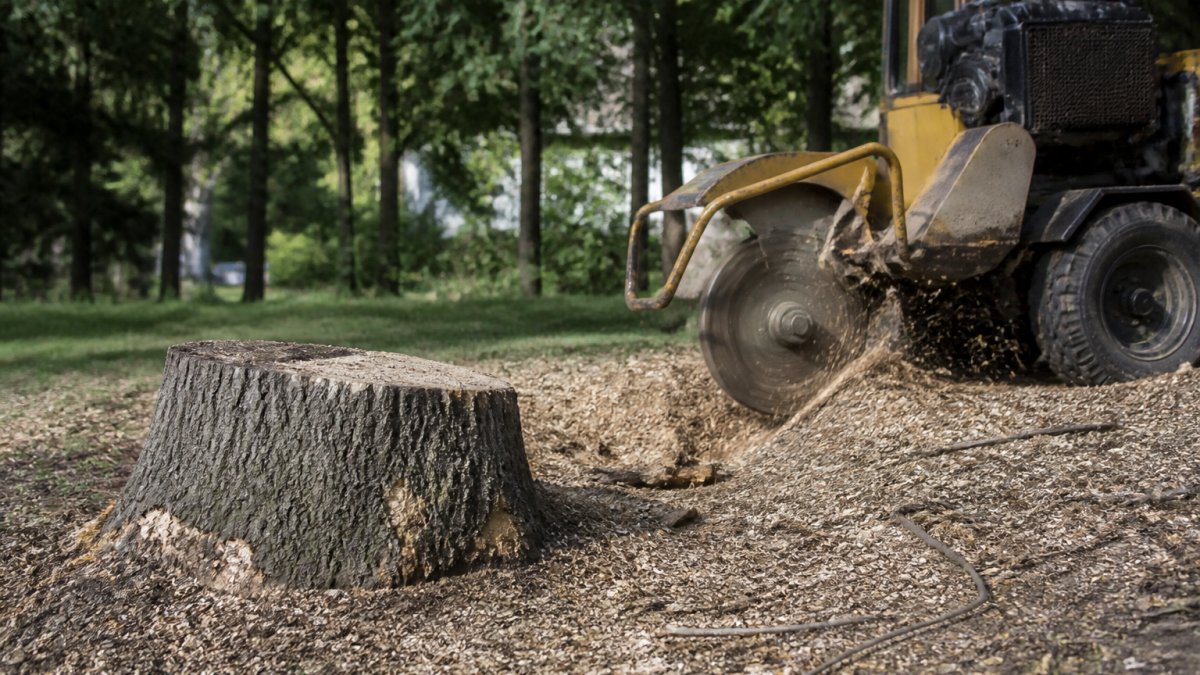
The logic is straightforward. A stump grinder chews across the top of the stump in overlapping passes. A 12-inch stump might take a few minutes.
Most homeowners never see this math. They get a single number and have to guess whether it is fair. Understanding the per-inch formula changes that.
The Basic Per-Inch Formula
Here is the core calculation most crews use:
Price = base fee + (stump diameter in inches × rate per inch) + add-ons
The base fee covers travel, setup, and equipment. The per-inch rate covers grinding time. Add-ons cover extras like hauling, deeper grinding, or difficult access.
For example, a provider charging a per-inch rate on a 24-inch stump would multiply that rate by 24, then add the base fee. The exact rate varies by region, equipment, and demand.
How to Measure Stump Diameter Consistently
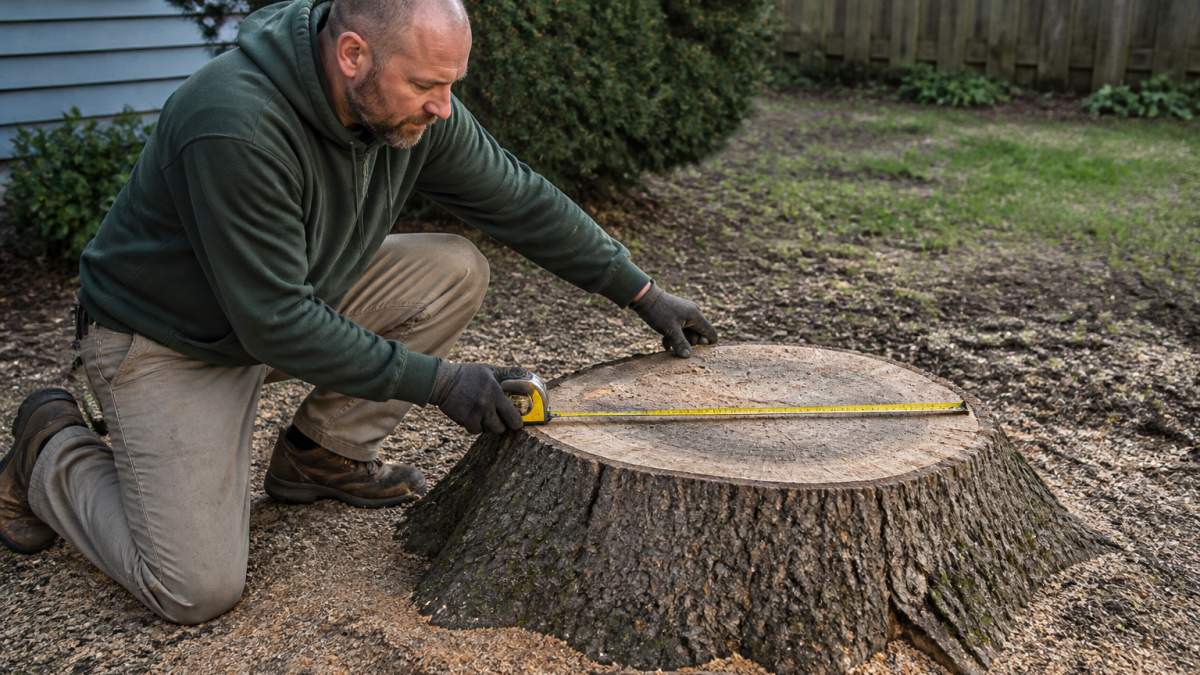
Measure across the widest point of the stump base, at ground level, not the top of the cut. Stumps flare outward near the soil, so the base is always wider than the flat cut surface.
Follow these steps:
- Clear dirt, mulch, and debris from around the base
- Stretch a tape measure across the widest span at soil level
- Record the number in inches
A common mistake is measuring the top cut and quoting that number. The crew will measure the base, and the price will jump. Measure it right the first time.
Average Stump Grinding Cost by Stump Size
Stump grinding cost tracks closely with diameter, so size is the single biggest driver of your final bill. Most quotes fall into three rough tiers.
| Stump Size | Typical Diameter | Grinding Time | Price Tier |
|---|---|---|---|
| Small | Up to 12 inches | Under 30 minutes | Lowest |
| Medium | 13 to 24 inches | 30 to 60 minutes | Mid-range |
| Large | 25 to 40 inches | 1 to 2 hours | Highest |
| Very large | Over 40 inches | 2+ hours | Quoted case by case |
These tiers are not fixed prices. They reflect how time and machine wear scale with size.
For exact pricing on your property, contact Gone In One Grind for a free quote rather than relying on national averages.
What Does It Cost to Grind a 24-Inch Stump?
A 24-inch stump sits in the medium tier, and it is the size most homeowners ask about.
The formula again: Price = base fee + (diameter × rate per inch) + add-ons.
Because rates vary by region, equipment, and demand, the honest way to read a quote is to plug in the numbers your provider gives you. Here is a worked example using a mid-range per-inch rate of $3 and a $75 base fee, which is a common pattern in many markets:
| Line Item | Math | Amount |
|---|---|---|
| Base fee (travel + setup) | flat | $75 |
| Per-inch charge | 24 in × $3 | $72 |
| Standard grind subtotal | $75 + $72 | $147 |
| Add hauling | + $60 to $100 | $207 to $247 |
| Add deep root chase | + $50 to $150 | varies |
So the same 24-inch stump can land anywhere from roughly $150 to $400 depending on what is included.
Three scenarios for the same 24-inch stump:
- Leave the chips, standard grind: base fee + per-inch charge only. Lowest realistic total.
- Haul the chips, standard grind: adds labor, a truck, and disposal. Expect the per-inch charge plus a hauling line.
- Deep grind for replanting or building: adds machine time and often a second pass, pushing the total toward the top of the range.
A 24-inch stump is usually the sweet spot where a crew finishes in under an hour, which keeps labor and machine time predictable.
Stump Grinding and Hauling Cost: What the Chips Add
Stump grinding and hauling cost more than grinding alone because hauling adds labor, a truck, and disposal. Grinding leaves a pile of wood chips and grindings behind. Leaving them in place costs nothing extra.
Your options:
- Leave the chips: Lowest cost. Spread them as mulch or fill the hole.
- Haul everything: Highest cost. Crew loads, trucks, and disposes of all debris.
- Partial haul: A middle option. Keep some chips, remove the excess.
Many homeowners keep the chips for garden beds. It saves money and puts the grindings to work. If you plan to replant or build, you may want them gone.
Factors That Change Your Stump Removal Estimate
A stump removal estimate is not just diameter times a rate. Several site conditions push the number up or down, and knowing them helps you compare quotes fairly.
The biggest variables are access, terrain, soil, and how deep the crew needs to grind. Two stumps the same size can cost very different amounts based on where they sit.
Site Access, Terrain, and Soil Conditions
Site access is often the hidden cost. A grinder needs a clear path to reach the stump. Tight gates, steep slopes, and fenced yards slow the crew down.
Watch for these conditions:
- Narrow gates that block the machine
- Slopes or soft ground that limit traction
- Rocky or clay-heavy soil that slows grinding
Sandy soil grinds faster. Rocky soil can dull teeth and add time. Terrain that forces hand work costs more.
Grinding Depth and Root System Scope
Grinding depth changes the price. A shallow grind removes the visible stump. A deep grind chases the root system below grade so you can replant or build.
Tell your provider your goal up front:
- Replanting grass: a standard grind is usually enough
- Building or paving: you need a deeper grind and root removal
- Removing surface roots: expect extra charges for the surrounding area
The deeper the grind, the more time and the higher the bill. Be clear about what happens to the space afterward.
Minimum Fees, Call-Out Charges, and Hourly Rates
A minimum fee or call-out charge applies when a job is too small to justify the trip.
You will see three pricing models:
| Pricing Model | How It Works | Best For |
|---|---|---|
| Per-inch | Rate multiplied by diameter | Single stumps, clear sizing |
| Hourly rate | Charged by machine time | Multiple stumps, unknown size |
| Minimum fee | Flat floor for any job | Small or single stumps |
The hourly rate model can save money when you have several stumps on one property. The crew runs the machine once and grinds them all.
Ask which model a provider uses before you compare quotes. Comparing an hourly quote to a per-inch quote is apples to oranges.
Grinding vs. Full Stump Removal: When Each Makes Sense
Grinding removes the stump above and just below grade. Full removal, or excavation, pulls the entire stump and major roots out of the ground.
Most guides treat the two methods as interchangeable. They are not. Use these decision criteria instead.
Choose grinding when:
- You want the stump gone and the yard level
- You plan to replant grass or a garden in the same spot
- You want minimal disruption to the surrounding lawn and roots
Choose full removal when:
- You are building a structure, driveway, or patio over the spot
- The root system is causing damage to foundations, pipes, or pavement
- You need the hole backfilled and compacted to bear a load
When grinding is unsuitable, even if you would prefer it:
- Replanting a tree in the same spot. Grinding leaves the root ball and major roots in place. A new tree planted into that mass often struggles. Full extraction clears the space.
- Construction or paving. A ground stump leaves voids and decaying wood under the surface. Over time that settles, and anything built on top cracks or sinks. Excavation and compaction are required.
- Aggressive or invasive root spread. Species that send roots wide and shallow can keep causing damage even after the stump is ground. Full removal addresses the root system, not just the visible stump.
The cost trade-off. Full removal costs more because it involves excavation, hauling, and backfill. Grinding is faster and leaves the soil mostly intact.
How to Compare Stump Removal Quotes Line by Line
Comparing quotes well means comparing scope, not just the bottom line. A cheaper quote often leaves out hauling, deep grinding, or cleanup, and the price climbs once work starts.
Use this checklist when you review each quote:
- Does it state the stump diameter measured?
- Is the pricing model clear (per-inch, hourly, or flat)?
- Is the base or call-out fee listed separately?
- Does it include hauling, or is that extra?
A quote that answers all eight is one you can trust. A quote that dodges them is one to question.
At Gone In One Grind, we price by the job and put the scope in writing, so there are no surprises when the machine shows up.
When you are ready, review guidance from the U.S. Forest Service on tree and stump management to understand your options, then get a quote you can actually compare.
Frequently Asked Questions
Do stump removal companies charge by the inch?
Most professional stump grinding services price by stump diameter in inches, often with a minimum fee that applies even to small stumps. The per-inch rate covers the equipment, labor, and time needed to grind the stump below grade. Some companies also charge an hourly rate for larger or multi-stump jobs. When you request a stump removal estimate, ask whether the quote is based on diameter, time, or a flat rate so you can compare providers accurately.
How much does it cost to grind a 24-inch stump?
The cost to grind a 24-inch stump depends on your location, stump height, grinding depth, and site access. A 24-inch stump sits in the mid-size range, so expect pricing between a small stump minimum and a large stump rate. The best way to get an accurate figure is to measure the diameter yourself and request a stump removal estimate from a local provider. Ask whether the quote includes cleanup and whether the grindings stay on site or get hauled away.
Does stump grinding include hauling away the wood chips?
Not always. Many providers leave the grindings on site so you can use them as mulch around your landscaping. If you want the debris hauled away, expect an additional charge that covers labor, loading, and disposal. Stump grinding and hauling cost more than grinding alone because it adds a separate step and often a second trip. Confirm in writing whether your quote includes hauling or whether chips stay in place before you book the job.
Is stump grinding cheaper than full stump removal?
Stump grinding is almost always cheaper than full stump removal because it leaves the root ball in the ground and only removes the visible stump below grade. Full removal involves excavation, which means more labor, heavier equipment, and soil backfill. Full removal makes sense when you plan to build, pour concrete, or replant in the same spot. For most residential landscaping projects, grinding gets the job done at a lower cost.
Stump removal does not have to be a guessing game. Measure your stump, ask for a written scope, and compare quotes on the same terms. Gone In One Grind offers same-week service, a professional-grade track grinder, and honest pricing with no hidden fees or upsells. Get a free quote from Gone In One Grind and get a clean, level, stump-free yard ready for whatever comes next.