
Table of Contents
- Commercial Stump Removal Services: What Property Managers Need to Know
- Tree Stump Grinding vs. Removal: Costs, Timelines, and Site Impact
- A Step-by-Step Workflow for Commercial Stump Projects
- What Drives Commercial Stump Removal Pricing and Budgeting
- Planning the Work Around Business Operations
- Soil Preparation After Stump Grinding
- How Long to Wait to Plant After Stump Grinding
- What to Plant After Stump Grinding on Commercial Grounds
- Frequently Asked Questions
Last Updated: October 21, 2026
Commercial Stump Removal Services: What Property Managers Need to Know
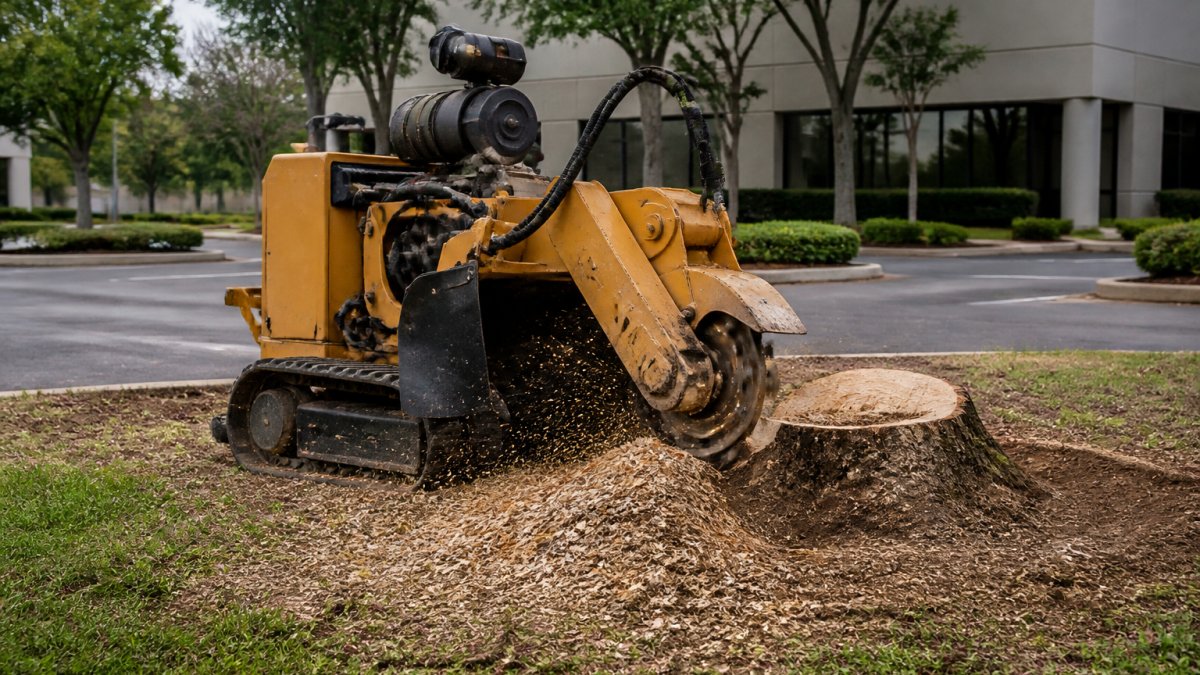
Commercial grounds stump removal services eliminate tree stumps from business properties, parking islands, medians, and managed landscapes using specialized grinding or extraction equipment.
A leftover stump on commercial grounds is more than an eyesore. It's a tripping hazard, a mowing obstacle, and a liability question your insurer may eventually ask about.
Below, we'll walk through the grinding-versus-removal decision, a project workflow you can hand to a contractor, the factors that drive pricing, and how to restore the ground once the stump is gone.
Tree Stump Grinding vs. Removal: Costs, Timelines, and Site Impact
Stump grinding and full stump removal are different jobs with different footprints. Grinding cuts the stump down below grade and leaves the root system in place. Full removal pulls the stump and major roots out of the ground, which means excavation, heavier equipment, and a larger disturbed area.
| Factor | Grinding | Full Removal |
|---|---|---|
| What happens | Stump cut 15-30 cm below grade | Stump and roots extracted |
| Site disturbance | Small, contained work zone | Large excavation pit |
| Typical timeline | Often under a day per stump | Usually a day or more per stump |
| Debris | Wood chips, often reusable as mulch | Stump, roots, and soil to haul |
| Best for | Replanting, mowing, hazard removal | Construction, paving, replanting large trees |
When Grinding Is the Right Call
Grinding wins when the goal is a safe, level surface. Removing a hazard near a sidewalk, clearing mowing lanes, or prepping a bed for new plantings gets done with minimal disruption to turf and pavement. Keeping the root system in the soil can also help stabilize the ground while it settles.
When Full Removal Makes Sense
Full removal is the answer when the ground itself needs to be clear. Construction pads, new hardscape, utility trenching, and large replacement trees all call for root-free soil. The trade-off is real: bigger equipment, more spoil to haul, and a longer restoration window.
A Step-by-Step Workflow for Commercial Stump Projects
A commercial stump project runs on a repeatable sequence, but the value is in the decision points between steps. The workflow below is written so a property manager can hand it to a contractor, track progress, and know what "done" looks like at each stage.
Phase 1: Pre-Bid Assessment (Before You Solicit Quotes)
- Build a stump inventory. Walk the site and log every stump with species, diameter at ground level, cut height, distance to pavement, structures, irrigation heads, and plantings. Photograph each with a scale reference. A count and diameter list turns a vague site visit into comparable bids.
- Classify each stump by end use. Mark each as hazard removal, mowing clearance, replanting bed, hardscape/construction prep, or utility trenching. End use drives grinding depth and whether full removal is required, and it is the single biggest reason two bids for "the same" stump differ.
- Map access and staging. Measure gate widths and note surface type, slope, overhead clearance, and load limits. Track-mounted grinders need different access than tow-behind units. If a gate is narrower than the machine, the bid must include a different approach, not a surprise change order.
- Flag utility exposure. Identify irrigation mains, landscape lighting runs, gas services, fiber, and electric. You do not need to locate them yourself, but the bid should state who calls 811 and who pays for private locating of lines the public service does not mark.
Phase 2: Procurement and Compliance
- Confirm permits and tree ordinances. Check with the local building or public works department on right-of-way permits for parkway stumps and any tree preservation or removal ordinance that applies to commercial sites. Ask whether a removal permit or replacement-tree requirement applies before the crew mobilizes.
- Request utility locating. Call 811 before any digging or grinding near buried lines (811 Before You Dig). The 811 Call Before You Dig service connects you to the free locating service that marks public utilities. Private lines, irrigation, site lighting, private fiber, usually require a separate private locator, and that cost and scheduling belong in the quote.
- Get itemized written quotes. Require line items for grinding depth, number of stumps, debris haul-off, backfill and topsoil, grading, seed or sod, permit fees, traffic control, and disposal. A single lump sum hides the exclusions that become change orders.
- Verify insurance and crew qualifications. Ask for a certificate of insurance naming your property entity, and confirm the crew is trained on the specific equipment. Safety documentation belongs in the contract, not the conversation.
Phase 3: Execution and Handoff
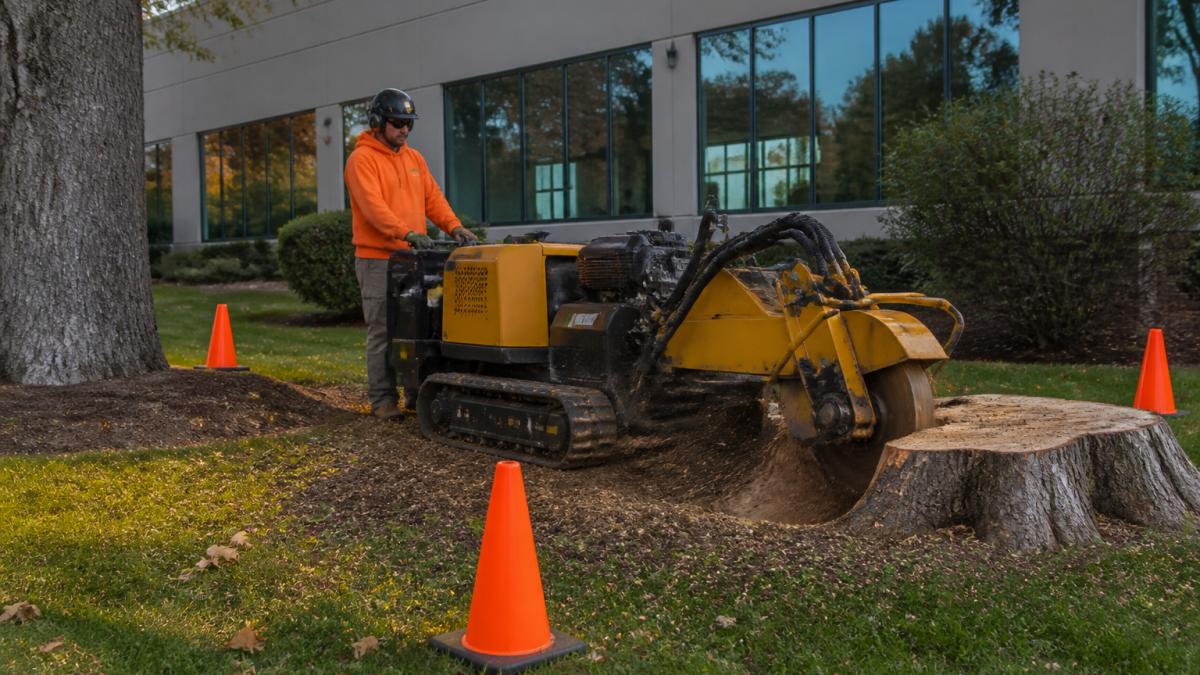
- Set the work zone and notification plan. Cones, barricades, and a pedestrian detour keep tenants and customers out of the hazard area. Notify tenants and staff in advance with a work zone map, and confirm at least one accessible route stays open.
- Grind or remove to the specified depth. Chips get separated from spoil; the root flare gets cut below grade. Confirm the depth in writing before work starts, it determines whether you can replant, lay sod, or build over the spot.
- Backfill, grade, and restore. Topsoil, light compaction, seed or sod, and a final walkthrough with the property manager. Photograph the finished grade against the surrounding surface so settling claims are documented.
- Close out with documentation. Collect the disposal receipts, the restoration sign-off, and a photo record of each stump location. That file is what protects you if a sinkhole or settling issue appears a season later.
Utility Locating, Permits, and Site Safety
Underground utilities are the single biggest risk on any stump project. The 811 service is free but only marks public utilities.
Permits vary by municipality. Some require a right-of-way permit for parkway stumps; others have tree preservation ordinances for commercial sites.
Safety precautions belong in the contract, not just the conversation. Ask for proof of insurance, a written work zone plan, and confirmation the crew is trained on the equipment they'll run.
What Drives Commercial Stump Removal Pricing and Budgeting
Pricing for commercial stump work depends on a handful of variables. We quote on scope, not a flat rate, because two stumps of the same size can be very different jobs. The useful question is not "what does it cost" but "what in my scope is moving the number", because that is what you can change.
The Cost Drivers, and How Each One Moves a Bid
- Stump diameter and count. Grinding time scales with diameter and passes required. A cluster of small stumps can cost more than one large stump because mobilization and setup repeat. Ask for a per-stump line so you can see the count effect.
- Species and root structure. Dense hardwood root flares take longer than softwoods, and roots that have grown into pavement or foundations require slower, more careful cutting. Species is a legitimate bid variable, not an excuse.
- Site access. Narrow gates, slope, soft ground, and overhead clearance slow equipment and may require a smaller, slower machine that costs more per hour. Access is the most common reason a low bid becomes a change order.
How to Compare Bids Without Getting Burned
Line up quotes on the same scope sheet: stump count and diameter, specified depth, debris disposition, restoration spec, permit responsibility, and utility locating responsibility. A dramatically lower bid usually excludes debris haul-off, restoration, or deeper grinding, or assumes access the site lacks. Ask what is not included before you sign.
Building the Budget Line
Budget stump work as three lines, not one: removal, debris and disposal, and restoration. Treating backfill and seeding as an afterthought means paying twice, once for the grind and again for a settling repair.
For multi-stump projects, ask whether mobilization is charged once or per visit. Batching stumps into a single mobilization is often the largest available savings on a commercial grounds project, and it is a scheduling decision you control.
Planning the Work Around Business Operations
Scheduling is where commercial projects live or die. A stump in a customer parking lot can't come out at noon on a Saturday. Plan around peak hours, deliveries, and tenant access.
Practical sequencing:
- Schedule grinding during low-traffic windows, early morning or after close.
- Stage equipment away from customer entrances and loading docks.
- Notify tenants and staff in advance with the work zone map.
At Gone In One Grind, we schedule commercial work with the property's operating hours in mind.
Soil Preparation After Stump Grinding
Soil preparation after stump grinding determines whether the spot becomes usable ground or a sunken patch. Grinding leaves a mix of chips, shredded root, and disturbed soil that settles, so it needs attention before you plant or seed.
The process:
- Remove excess chips. Keep a portion for mulch; haul off the rest.
- Break up compacted soil in and around the grind area.
- Fill the hole with topsoil, not chips alone, to reduce settling.
- Grade to match surrounding surface so water drains away from structures.
- Compact lightly and water to settle.
- Test the soil if you plan to plant immediately.
How Long to Wait to Plant After Stump Grinding
The short answer: wait until the ground settles and the fresh wood breaks down enough to support roots, usually a few weeks for grass and several months for shrubs or trees.
Fresh chips tie up nitrogen as they decompose, which can starve new plantings. Mixing in topsoil and letting the area settle for a season gives the best odds. For a replacement tree in the same spot, wait longer and offset slightly from the original stump.
What to Plant After Stump Grinding on Commercial Grounds
Choosing what to plant after stump grinding depends on the site's use, sun exposure, and maintenance budget. On commercial grounds, low-maintenance and durable usually beat ornamental.
Good options:
- Turf grass for high-visibility lawn areas, once the soil has settled.
- Native perennials and ornamental grasses for low-water beds and medians.
- Shrubs for screening and structure, planted offset from the old stump.
Match the planting to the irrigation and maintenance your grounds crew can actually support. A bed that needs weekly attention is a cost, not an amenity.
Frequently Asked Questions
Will a tree grow back if you don't remove the stump?
A stump alone rarely regrows into a full tree, but many species send up suckers or sprouts from the root system for years. Grinding the stump below grade removes the visible structure but leaves roots that can still sprout. Full removal takes out the stump and major roots. For commercial grounds, grinding to a depth of 6 to 12 inches and treating any regrowth is usually enough to prevent a repeat problem, though species like willow and poplar are more persistent.
Is it better to dig out stumps or grind them?
Grinding is faster, less disruptive, and works on tight commercial sites where excavation equipment would tear up pavement or landscaping. Digging or full removal makes sense when you need to replant in the exact spot, install hardscape, or run utilities through the area. Grinding leaves the root ball in place, so the soil settles over time and may need backfill. For most property maintenance budgets, grinding is the lower-cost option; full removal is the higher-cost, higher-disruption choice.
How long should you wait to plant after stump grinding?
Wait until the grindings and soil have settled, usually two to four weeks for shrubs and perennials and one full season for new trees. Fresh wood chips mixed into the soil tie up nitrogen as they decompose, so remove or age the chips before planting. Test the soil and amend it with compost. If you plan to plant a new tree in the same spot, give the old root system time to decay, often six to twelve months, to reduce rot and pest risk.
Can you plant a new tree in the same spot after stump removal?
Yes, but preparation matters. Remove as much of the old root mass and wood chips as practical, backfill with quality topsoil, and check drainage so the new tree does not sit in a rotting stump hole. Choose a species different from the removed tree to reduce disease pressure. Wait at least one growing season after grinding before planting a new tree in the same location, and have the soil tested for pH and nutrients before you buy the replacement.
A stump on commercial grounds is a small problem that gets bigger the longer it sits, and the fix depends on getting the scope right the first time. Gone In One Grind handles commercial grounds stump removal with a track-mounted grinder built for tight access, same-week scheduling, and clear written quotes with no hidden fees. We're locally owned, fully insured, and we leave the site level and clean, with wood chips available for mulch. Get a free quote and put the stump behind you.