
Table of Contents
- Best Way to Remove Stumps: A Decision Framework
- How to Remove a Tree Stump by Hand
- Stump Grinding vs. Stump Removal: Which Wins?
- How to Kill a Tree Stump (and When It Works)
- Tree Stump Removal Cost: What Drives the Price
- Safety, Permits, and Utility Locating
- When to Hire a Professional Stump Removal Service
- Frequently Asked Questions
Last Updated: October 18, 2026
Best Way to Remove Stumps: A Decision Framework
The best way to remove stumps depends on three things: stump diameter, access for equipment, and how fast you need the ground clear.
Here is the short version. Grinding wins for most residential yards because it removes the stump without tearing up the lawn.
Stump removal is the process of eliminating a tree stump and its root flare so the ground can be leveled, replanted, or built on.
Below, we walk through each method, what it costs in time and labor, and when to stop DIY work and call a professional.
How to Remove a Tree Stump by Hand
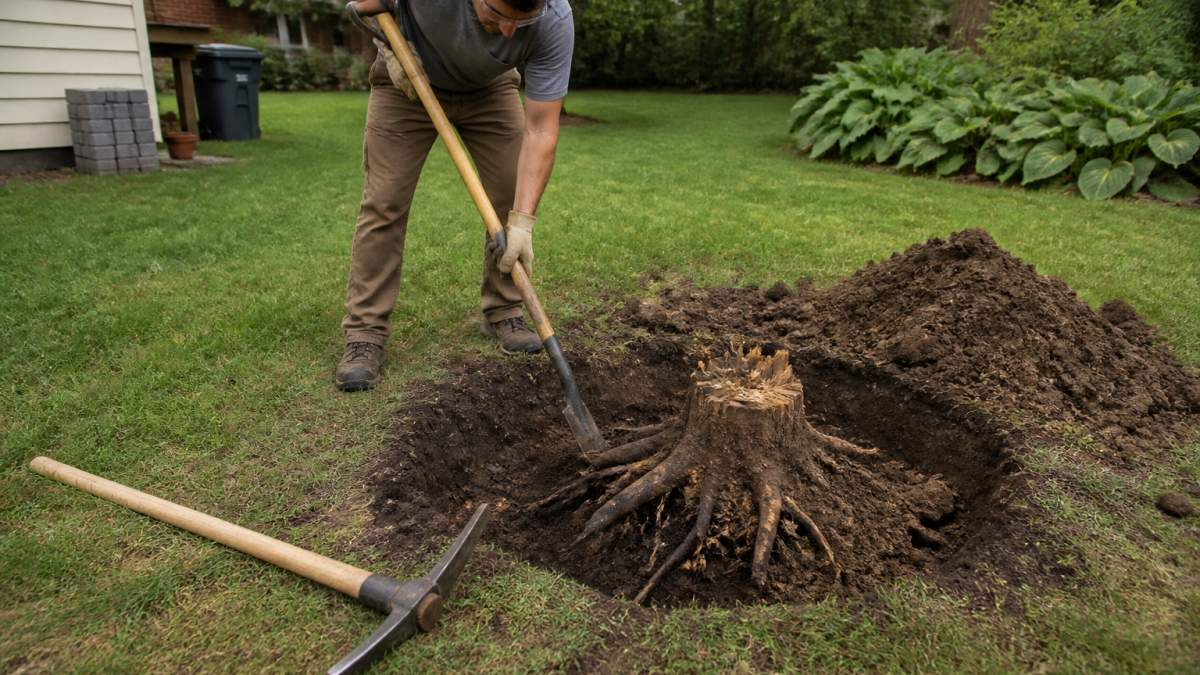
Removing a tree stump by hand means digging out the root flare, cutting the roots, and prying the stump free. It works best on stumps under roughly 12 inches across and on species with shallow root systems.
Step 1: Expose the Root Flare
Dig a trench around the stump, working outward from the base. Cut through exposed roots with a mattock or root saw as you go. Expect this step to take the longest on old, dried wood.
Step 2: Cut Roots and Pry the Stump
Sever the main roots on all sides, then work a pry bar under the root ball and lever upward. Cut roots you cannot reach rather than forcing the stump, which risks snapping the pry bar.
Step 3: Remove Debris and Fill the Hole
Lift the stump out, shake loose soil back into the hole, and fill with topsoil. Tamp it down and seed or sod over the spot.
Stump Grinding vs. Stump Removal: Which Wins?
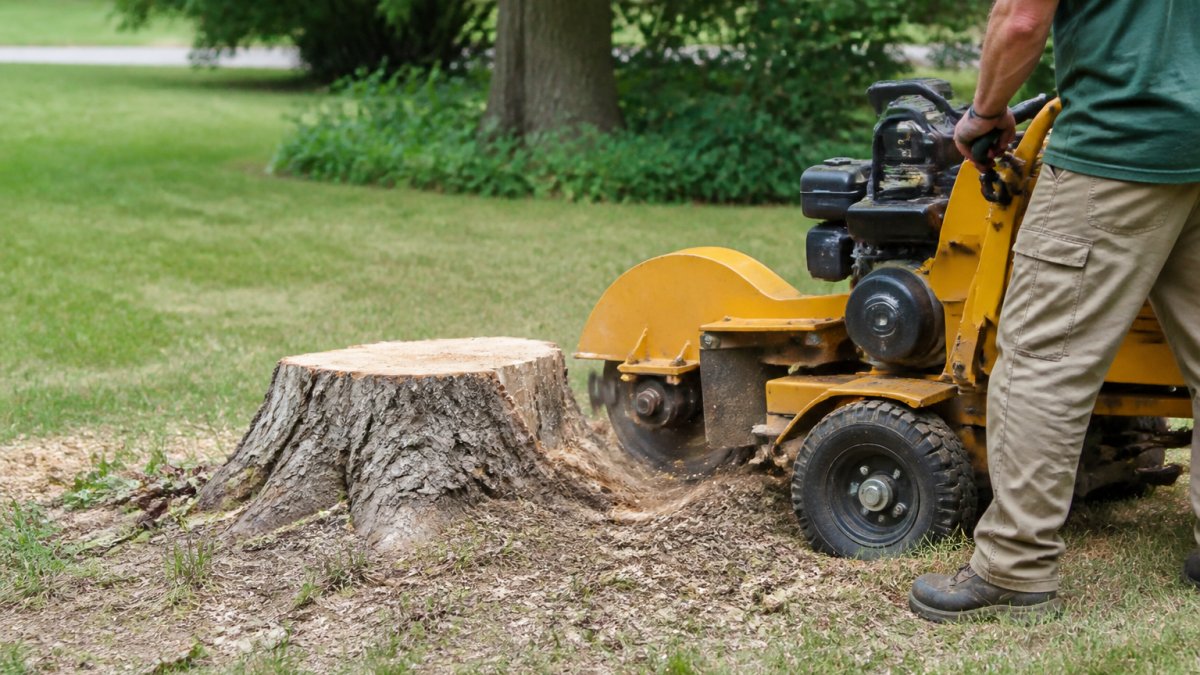
Stump grinding and stump removal are not the same job. Grinding cuts the stump down below grade with a rotating cutter wheel, leaving the root system to decay.
Grinding is faster, cheaper, and far less disruptive to surrounding turf. Removal makes sense when you are building over the spot, replanting in the same location, or dealing with a stump near a foundation or driveway.
| Method | Time | Yard Disruption | Best For |
|---|---|---|---|
| Grinding | 1-2 hours | Low | Most residential yards |
| Full removal | Half day or more | High | Construction, replanting |
| Hand digging | Several hours to days | Medium | Small stumps |
| Chemical treatment | Months | None | Patience, remote spots |
| Burning | Days to weeks | Medium | Rural, dry conditions |
How to Kill a Tree Stump (and When It Works)
Killing a stump stops regrowth but does not remove the wood. The common approach is drilling holes into the stump and filling them with a stump-killing chemical, then waiting months for the wood to soften.
This method suits homeowners who want the stump gone eventually and do not mind the wait. It does not work fast, and many species resprout from the roots unless you treat the cut surface immediately after felling.
Chemical removers also leave salts and residue in the soil, which can affect what you plant nearby. Read the label carefully and follow local disposal rules.
Tree Stump Removal Cost: What Drives the Price
Stump removal cost is driven by four variables: stump diameter, root spread, access for equipment, and whether debris is hauled away. Because pricing varies by provider and property, the honest way to compare methods is on the inputs that move the number, labor hours, equipment rental, disposal fees, and professional fees, rather than a single flat rate.
What Moves the Price
- Diameter at grade. Grinders are sized to the stump, and a wider stump means more passes, more time, and a larger machine. A stump measured at ground level can be far wider than the visible cut surface once the flare is exposed.
- Root spread and species. Shallow-rooted species pry out more easily; deep taproots and dense root balls add hours to hand digging and can stall a small grinder.
- Access. A grinder needs a gate wide enough to pass and a path to the stump. Tight side yards, slopes, and fenced lots push crews toward smaller machines and longer labor.
Method-by-Method Cost and Time Comparison
Use this table to compare the realistic inputs for each approach. Figures are typical U.S. ranges and vary by region, season, and provider.
| Method | Typical Time | Main Cost Drivers | Best For |
|---|---|---|---|
| Hand digging | Several hours to a few days | Labor, hand tools, pry bar, root saw, disposal | Stumps under about 12 inches across, shallow roots |
| Stump grinding (DIY rental) | 1-2 hours of grinding plus transport | Grinder rental by the day, fuel, safety gear, chip disposal | Homeowners comfortable with heavy equipment |
| Stump grinding (professional) | Under an hour to a few hours on site | Machine size, diameter, access, chip hauling | Most residential yards |
| Full removal (professional) | Half day or more | Excavation, root ball extraction, backfill, hauling | Construction, replanting in the same spot |
| Chemical stump killer | Months | Product, drilling time, repeat applications | Remote stumps where appearance does not matter |
| Burning | Days to weeks of tending | Fuel, permits, monitoring, ash cleanup | Rural lots where burning is allowed |
A common pattern is that the cheapest headline quote excludes debris hauling or insurance, and the final invoice lands closer to the middle of the range. Ask every provider the same three questions before booking:
- Is the quote based on stump diameter or measured at grade?
- Are wood chips left on site or hauled away?
- Is the work insured, and what happens if a utility or fence is damaged?
Where the Money Actually Goes
For professional grinding, most of the price is machine size, labor, and travel, not the cutting itself. For hand digging, almost all of it is your own time, plus tool wear and disposal. For chemical treatment, the product is inexpensive but the timeline stretches into months, and the stump still has to be dealt with physically afterward. Comparing methods on sticker price alone hides the largest cost in most DIY jobs: hours.
Safety, Permits, and Utility Locating
Stump work combines sharp hand tools, heavy power equipment, fire, and chemicals, often in the same afternoon. Treat preparation as part of the job, not an afterthought.
Before You Cut, Dig, or Burn
- Call 811. The national Call Before You Dig service routes a locate request to participating utilities, which mark buried lines. Most states require a locate request before excavation, and the service is free. Wait for the marks and respect the tolerance zone around them.
- Check local burning rules. Many municipalities restrict open burning, require a permit, or ban it outright during dry periods. Confirm with the local fire department before lighting anything.
- Check for permits. Grinding and digging usually need no permit, but burning, large excavations, and work in some easements or historic districts can. A quick call to the local building or fire authority settles it.
Protective Equipment by Method
| Method | Minimum Protective Equipment |
|---|---|
| Hand digging | Eye protection, gloves, sturdy boots, long pants |
| Chainsaw work | Eye and face protection, hearing protection, cut-resistant chaps, gloves, boots |
| Stump grinder | Eye and hearing protection, gloves, boots, dust mask, close-fitting clothing with no loose cuffs |
| Burning | Eye protection, gloves, boots, long sleeves, water or extinguisher on hand |
| Chemical treatment | Gloves, eye protection, long sleeves, and the label-specified respirator if required |
Method-Specific Hazards
- Chainsaws and grinders. Kickback and thrown debris are the main risks. Keep bystanders and pets well back, never cut with the tip of the bar, and let the grinder come to a full stop before adjusting anything.
- Grinding near structures. Cutter wheels throw chips and can contact fences, siding, and buried lines. Keep a clear working radius and know where the wheel is at all times.
- Burning. Root fires can travel underground through dry roots and surface hours later. Never burn a stump near a structure, fence line, or dry brush, and keep water within reach.
When the Risk Outweighs the DIY
If the stump sits within a few feet of a foundation, driveway, utility easement, or overhead line, the safe call is a professional with the right equipment and insurance. The same applies to stumps large enough that a pry bar and a weekend will not move them. The cost of a repair after a struck line or cracked driveway dwarfs the price of hiring out the job.
When to Hire a Professional Stump Removal Service
Hire a professional when the stump is large, close to structures, or sitting on a site you need clear fast.
At Gone In One Grind, we handle residential and commercial stump grinding across the western suburbs with a professional-grade track grinder, same-week scheduling, and no hidden fees.
If your yard needs to be ready for replanting, a new patio, or a construction project, grinding gets you there without tearing up the lawn.
Frequently Asked Questions
What is the fastest way to remove a tree stump?
Stump grinding is the fastest reliable method for most homeowners. A professional grinder can reduce a medium stump to chips in under an hour, while digging by hand often takes a full day or more. Chemical treatments and burning take weeks to months and are not considered fast. For very small stumps under 6 inches, a mattock and saw can be quicker than scheduling a service, but larger stumps almost always favor grinding.
Is stump grinding better than digging out a stump?
Grinding is better for most residential situations because it leaves the lawn level, creates useful wood chips, and avoids the heavy labor and large holes that come with digging. Digging can make sense when you need the root ball completely gone for replanting or construction, or when the stump is small and you want to avoid equipment access issues. Grinding also reduces the risk of damaging nearby utilities and irrigation lines.
Can you remove a tree stump without digging?
Yes. Grinding removes the stump without digging it out, and chemical stump removers or burning can also break down a stump in place. Grinding is the most reliable no-dig option because it physically destroys the wood above and below grade. Chemical products speed decay but leave the root ball in the ground, and burning is limited by local fire rules and root system size. For a clean, level yard, grinding is the practical choice.
What are common mistakes to avoid when removing a tree stump?
Common mistakes include skipping the utility locate before digging, using too much kerosene or accelerant when burning, and leaving the stump cut too high so the grinder cannot reach the root flare. Homeowners also forget to check local burn restrictions and HOA rules. Another frequent error is not accounting for the root ball when replanting, which causes new trees to sit too high or too low. Planning the method around stump size and access prevents most of these issues.
When should you hire a professional to remove a stump?
Hire a professional when the stump is larger than about 12 inches in diameter, when it sits close to a fence, foundation, or utility line, or when you lack the tools and time for digging. Professional stump grinding also handles old, dense stumps that hand tools cannot move. If the stump is part of a larger landscaping or construction project, a removal company can clear the ground and leave it ready for replanting or building.
Does Epsom salt destroy stumps?
Epsom salt can dry out and weaken a stump over time, but it is not a fast or reliable removal method. It works by drawing moisture from the wood, which speeds decay, but the process can take months and leaves the root ball in place. For homeowners who want the stump gone this season, grinding or hand digging is more dependable. Epsom salt is best treated as a slow decay aid, not a removal solution.
A stubborn stump can sit in your yard for years, tripping up mowers and blocking every landscaping plan you have. Gone In One Grind removes that problem with same-week service, insured crews, and a track grinder built for tight residential access. Request a free quote today and get a clean, level property ready for whatever comes next.