Table of Contents
- What Separates Good Stump Grinding Equipment From Great
- Cutting Performance and Grinding Efficiency: The Metrics That Matter
- How Stump Grinder Horsepower and Machine Specs Drive Results
- Choosing the Best Commercial Stump Grinder for Heavy Workloads
- When a Compact Stump Grinder Beats a Full-Size Machine
- Stump Grinding Equipment Cost: Budgeting for Purchase and Ownership
- Matching Equipment to Stump Size, Wood Condition, and Site Access
- Conclusion
- Frequently Asked Questions
Last Updated: October 19, 2026
What Separates Good Stump Grinding Equipment From Great
Walk onto any property with an old stump and you'll hear the same assumption: any machine with a spinning wheel will get the job done. That assumption costs money.
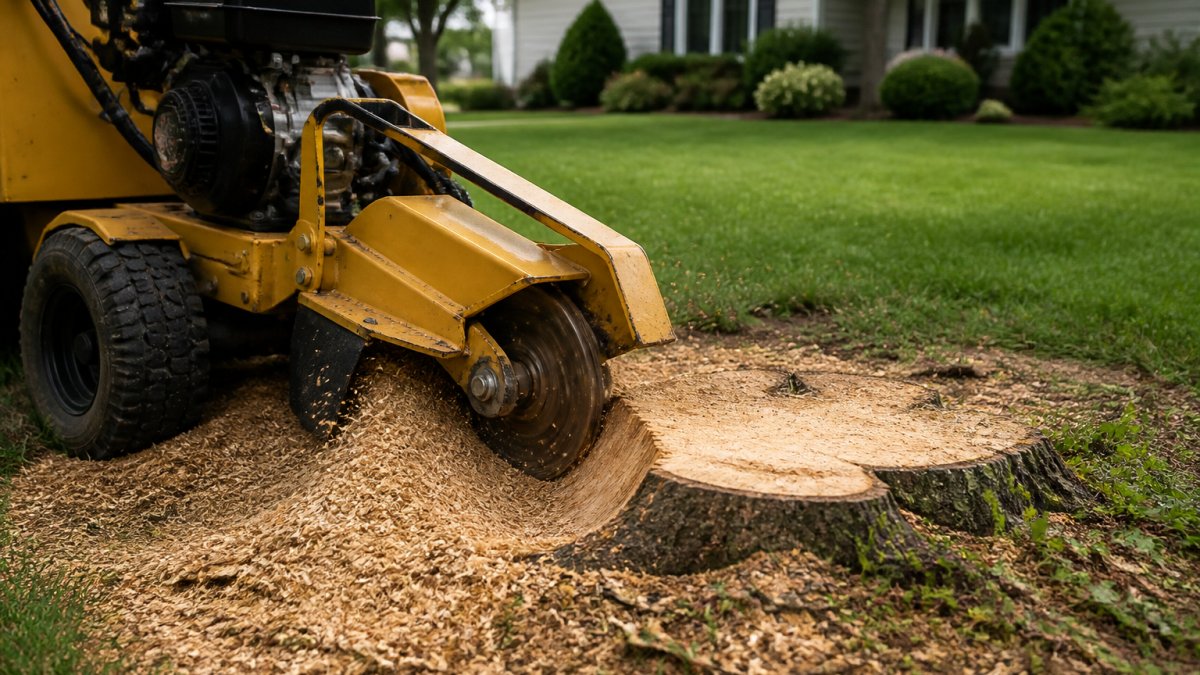
Stump grinding equipment is a category of heavy machinery built to reduce tree stumps below grade using a rotating cutting wheel fitted with carbide teeth. The best stump grinding equipment performance comes down to three things working together: cutting wheel design, engine power matched to the work, and a configuration that fits the site.
Below, we break down the metrics that actually predict how a machine will perform, where budgets go, and how to match equipment to the stump in front of you. At Gone In One Grind, we run professional-grade track machines, so this is grounded in what we see on real properties, not spec sheets.
Cutting Performance and Grinding Efficiency: The Metrics That Matter
Most buyers judge a stump grinder by horsepower alone. That's the first mistake.
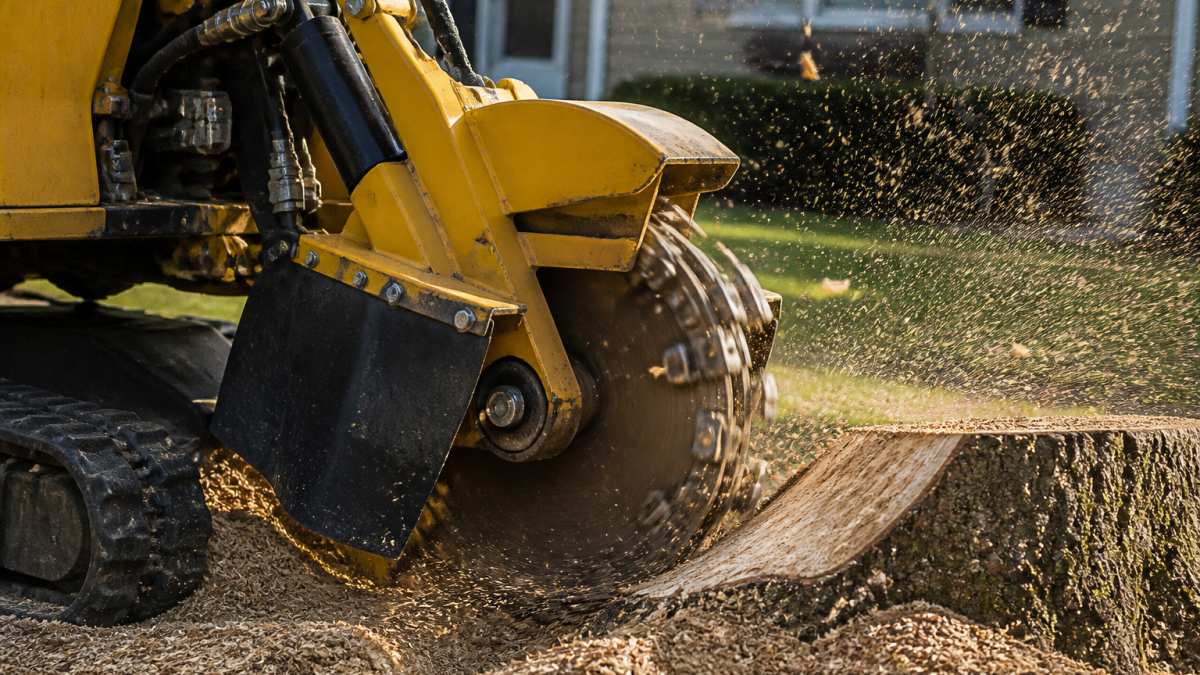
Cutting performance is a function of wheel speed, tooth geometry, and how efficiently the machine converts engine output into material removal.
The four metrics that actually predict output
Ignore brochure peak horsepower and score machines on these instead. Each one can be observed or timed on a demo without lab equipment.
- Material removal rate (MRR): cubic inches of wood removed per minute of wheel-in-wood time. Time a single pass across a stump of known diameter and depth, then divide the volume removed by the minutes the wheel was actually cutting. This is the single best predictor of job productivity.
- Stump diameter per hour: the field-friendly version of MRR. On a machine of a given class, a common pattern is roughly 8 to 14 inches of stump diameter cleared per hour per inch of stump height on medium hardwood, falling sharply as diameter and hardness rise. Track your own numbers on three stumps and you have a baseline for comparing any machine.
- Cutting depth per pass: how far below grade the head reaches before repositioning. Deeper reach means fewer setups and less repositioning time, which often matters more than raw wheel speed on large stumps.
How to run a fair side-by-side test
The gap in every competing guide is the absence of a consistent test. You can close it yourself in about an hour:
- Pick two or three stumps of the same species, similar diameter, and similar moisture. Green wood grinds differently than seasoned wood, so don't mix them.
- Mark a start and stop line and grind to the same depth below grade on each.
- Record wheel-in-wood time separately from total job time, setup, repositioning, and cleanup are where slow machines hide.
- Weigh or estimate chip volume, and note tooth condition before and after.
- Log fuel used per stump so you can convert performance into operating cost.
Run that protocol on a demo unit before you buy, and you will know more about its real output than any spec sheet will tell you.
Where the efficiency actually goes
Grinding efficiency shows up in three practical ways:
- Cutting speed: how fast the wheel advances through the wood without stalling
- Material removal rate: how much wood disappears per pass
- Tooth wear: how often you swap or sharpen replacement teeth
Hardwood like oak punishes dull teeth fast. Softwood cuts easier but can clog a poorly designed wheel. Operator technique matters too: a steady, deliberate sweep beats forcing the machine, which burns fuel and wears teeth. What most guides miss is that an extra set of teeth on hand often matters more than a few extra horsepower, a mid-job tooth swap costs minutes, while a stalled, overheated machine costs the afternoon.
How Stump Grinder Horsepower and Machine Specs Drive Results
Engine power sets the ceiling on what a machine can handle, but the number alone tells you little. Stump grinder horsepower needs to match the cutting wheel and the work in front of you, and the same machine will post very different numbers depending on species, moisture, soil, slope, and access.
Gas-powered units dominate residential and light commercial work because they balance power with mobility. The key specs to compare:
- Engine power: enough to maintain wheel speed under load, not just on paper
- Cutting wheel diameter and reach: determines grinding depth and how far the head travels
- Weight and footprint: affects access and lawn disruption
A machine that's underpowered for large stumps will stall, overheat, and slow the whole job. One that's overpowered for small residential work wastes fuel and tears up turf. Matching machine model to workload is the whole game.
Translate specs into outputs before you buy
Horsepower is an input. What you actually pay for is output per hour and cost per stump. Use these conversions when comparing machines:
- Power-to-wheel ratio: a larger cutting wheel with more teeth needs more torque to keep wheel speed up under load. A high-horsepower engine on an undersized wheel spins fast but bogs down in hardwood; a moderate engine on a well-matched wheel holds speed and grinds steadier.
- Reach to setup ratio: every inch of extra grinding depth per pass removes a repositioning cycle. On a 30-inch stump, a machine that reaches 12 inches below grade in one setup can finish in a fraction of the setups a 6-inch-reach unit needs.
- Weight to access trade-off: heavier track machines are more stable and grind faster, but they need gate width, ramp access, and turf protection. Measure your narrowest gate and overhead clearance before you fall in love with a spec sheet.
How conditions change the same machine's results
Performance is not universal. The same grinder will post different numbers across these variables, so test or quote with them in mind:
| Condition | Effect on performance | What to adjust |
|---|---|---|
| Hardwood (oak, hickory) | Slower cutting, faster tooth wear | Sharper teeth, lighter pass depth, more frequent swaps |
| Softwood (pine, maple) | Faster cutting, risk of wheel loading | Steady feed rate, clean wheel between passes |
| Green vs. seasoned wood | Green cuts slower and heavier; seasoned is drier and dustier | Expect longer wheel-in-wood time on fresh stumps |
| Rocky or sandy soil | Higher tooth breakage and dulling near grade | Raise the head slightly and inspect teeth after each stump |
| Slope and soft turf | Track machines hold traction; tires slip and rut | Match configuration to grade before quoting the job |
| Tight access | Full-size units may not reach the stump at all | Compact unit or remote-control head |
A machine that's underpowered for large stumps will stall, overheat, and slow the whole job. One that's overpowered for small residential work wastes fuel and tears up turf. Matching machine model to workload, and to the conditions on the property in front of you, is the whole game.
Choosing the Best Commercial Stump Grinder for Heavy Workloads
If you're clearing stumps for a living or managing large properties, the best commercial stump grinder is the one that holds up to repeated, heavy cutting without constant downtime.
Commercial use changes the priorities. Durability and maintenance access move to the top.
For property managers and HOAs overseeing commercial grounds, this is where professional-grade equipment pays for itself. A track machine handles larger stumps, and leaves a cleaner, level result ready for replanting or construction.
When a Compact Stump Grinder Beats a Full-Size Machine
Bigger isn't always better. A compact stump grinder wins whenever access is the constraint.
Picture a stump tucked between a fence, a foundation, and a prized shrub. A full-size machine can't get near it without tearing up the yard.
The trade-off is capacity. Compact machines handle smaller stumps and lighter workloads; they'll struggle with a massive, decades-old oak. That's why matching equipment to the site matters as much as matching it to the stump.
- Tight access or small yards: compact machine
- Open lots and large stumps: full-size track machine
- Mixed workload: a mid-range track unit covers both
Stump Grinding Equipment Cost: Budgeting for Purchase and Ownership
Stump grinding equipment cost is more than the sticker price. Total cost of ownership is where budgets actually live or die.
Purchase budget gets the attention, but ownership costs accumulate quietly: fuel, replacement teeth, maintenance, repairs, and downtime.
For most homeowners and property managers, buying equipment rarely makes sense for a one-time stump. Renting or hiring a professional service avoids the purchase price, storage, maintenance, and resale headaches entirely.
Matching Equipment to Stump Size, Wood Condition, and Site Access
The right machine is the one that fits the stump, the wood, and the site. Miss any of the three and performance drops.
Stump size sets the baseline. Large stumps need reach and grinding depth; small ones don't justify the disruption of a full-size unit.
Site conditions decide configuration. Rubber-tire machines move fast on flat, open ground.
| Situation | Best Configuration | Why It Works |
|---|---|---|
| Large oak, open lot | Full-size track machine | Reach, depth, and stability under heavy load |
| Small yard, tight gate | Compact unit | Fits access, limits lawn disruption |
| Sloped or soft ground | Track configuration | Better traction and control |
| Flat, open commercial site | Rubber-tire machine | Faster movement between stumps |
If the stump is beyond what a homeowner should tackle, a professional crew with the right machine removes it cleanly and leaves the yard level.
Conclusion
Matching equipment to the job is the difference between a clean, level yard and a torn-up mess with a stump still in it.
If you'd rather skip the guesswork, Gone In One Grind brings professional-grade track equipment, same-week service, and honest, upfront pricing to every job. We're locally owned, insured, and we leave your property clean and ready for what's next. Get a free quote and let us handle the grinding.
Frequently Asked Questions
What features most affect stump grinder performance?
Cutting wheel diameter and tooth condition matter most, followed by engine power and machine weight. A sharp, well-set cutting wheel on a mid-power machine will outgrind a dull wheel on a bigger unit every time. Hydraulic travel speed and swing control affect how smoothly the head moves through the wood, which reduces operator fatigue on long jobs. Track configuration and low ground pressure also shape performance on soft or sloped ground, where a rubber-tire unit may lose traction and slow the whole job down.
How much does a professional-grade stump grinder cost?
Stump grinding equipment cost varies widely by class. Compact walk-behind units generally sit at the low end, mid-size track machines land in the middle, and large tow-behind or self-propelled commercial grinders run highest. Engine size, cutting wheel diameter, track versus rubber-tire configuration, and hydraulic features all push the number up. For a specific figure on your property or project, request a quote from Gone In One Grind rather than relying on a generic range, since pricing depends on stump count, size, and site access.
What size stump grinder do I need for large stumps?
Large stumps, especially old hardwood stumps with dense grain and a wide root flare, need a machine with enough horsepower and a cutting wheel that can reach across the full diameter. A compact stump grinder can handle small to medium stumps and tight access, but grinding a 15-year-old oak stump calls for a commercial-grade track machine. Trying to force a small unit through a big stump slows the job, overheats the equipment, and leaves a rougher finish. Match the machine to the stump, not the other way around.
How do compact and self-propelled stump grinders compare?
Compact stump grinders fit through gates and work close to fences, foundations, and landscaping, which makes them the right call for tight residential lots. Self-propelled and track machines carry more horsepower and grind faster on large or numerous stumps, and their low ground pressure limits lawn damage on soft turf. The tradeoff is access: a full-size track grinder may not fit where a compact unit will. Many jobs need the compact machine for access and the larger one for throughput, which is why equipment selection starts with the site, not the spec sheet.