What Actually Happens to Your Yard After Stump Grinding (Roots, Mulch, and Next Steps)
The grinder is gone. The noise has stopped. And now you are standing in your yard looking at a mound of wood chips, a shallow depression in the ground, and probably wondering: what exactly just happened down there, and what do I do next?
This is the part most contractors skip. They grind the stump, load up the machine, and drive away — leaving you to figure out the rest. So here is the honest breakdown of what stump grinding actually leaves behind, what is happening underground, and how to get your yard back to normal.
What the Grinder Actually Does
A stump grinder does not remove the stump. It shreds it.
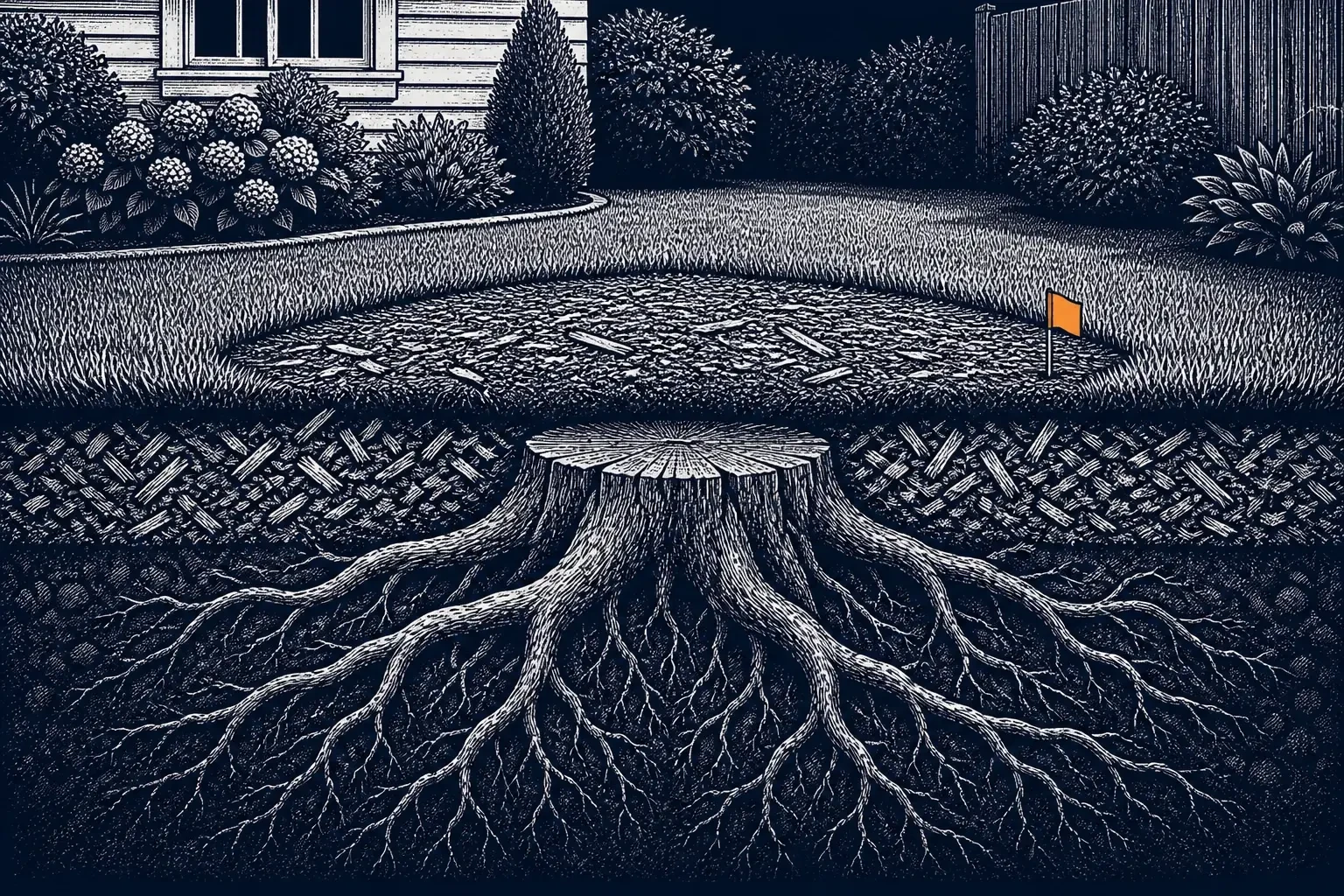
The machine uses a rotating cutting wheel with carbide teeth to chew the stump down 6 to 12 inches below ground level. What is left is a mix of wood chips, sawdust, and soil — piled up where the stump used to be.
The roots are still there. Every lateral root that spread out from the base of that tree is still in the ground, untouched. The grinder only addressed the stump itself.
That matters for what comes next.
The Wood Chip Pile: What to Do With It
After grinding, you will have a significant pile of material — a mix of shredded wood, bark, and soil. What you do with it depends on what you want to plant there.
If you want to reseed with grass: Do not use the wood chips as fill. Wood chips break down slowly and rob nitrogen from the soil as they decompose. If you pack them back into the hole and throw grass seed on top, you will get poor germination and patchy growth for years. Instead, remove the bulk of the chips, fill the depression with quality topsoil, and then seed.
If you want to plant a garden bed or shrubs: The wood chips make excellent mulch. Spread them 2 to 3 inches deep around the planting area. They will suppress weeds, retain moisture, and break down into organic matter over time. Just keep them a few inches away from the base of any new plants.
If you just want it gone: Bag it up for yard waste pickup, or ask your grinding contractor if they haul it away. At Gone In One Grind, we discuss this with every customer before we start — some people want the chips, some do not.
The Depression: Why It Happens and How to Fix It
After the chips are cleared, you will notice a shallow bowl in the ground where the stump was. This is normal and expected.
The depression exists because the stump occupied volume. Now that it is gone, there is a void. The surrounding soil will settle over time, but it will not fill in on its own — at least not evenly or quickly.
To fix it properly:
- Remove as much of the wood chip material as possible from the hole.
- Fill with quality topsoil, tamping it down lightly as you go to reduce air pockets.
- Mound the fill slightly above grade — it will settle over the next few weeks.
- Water the area to help it settle, then add more topsoil if needed.
- Once it is level and settled, seed or sod as desired.
For a large stump — anything over 20 inches in diameter — expect to bring in a meaningful amount of topsoil. A 24-inch stump can leave a depression that needs 3 to 5 cubic feet of fill.
What Is Happening Underground
This is the part that surprises most homeowners.
The roots are still there, and they are going to decay. That process takes time — anywhere from 2 to 10 years depending on the species, the size of the root system, and soil conditions. Oak and hickory roots break down slowly. Silver maple and cottonwood go faster.
As the roots decay, a few things happen:
Minor surface settling. As large lateral roots break down, the soil above them can settle slightly. You may notice small depressions appearing in your lawn over the next year or two, following the path of the old root system. These are easy to fill with topsoil as they appear.
Fungal growth. It is common to see mushrooms popping up in the area for a season or two after grinding. This is the fungal network breaking down the remaining wood material underground. It is not harmful to your lawn and will stop once the organic material is consumed.
No regrowth from the stump. Once the stump is ground down below the root collar, the tree cannot regenerate from that point. However, some species — particularly cottonwood, silver maple, and certain oaks — can send up suckers from the lateral roots. If you see small shoots appearing in the lawn near where the tree was, those are root suckers. They can be mowed down repeatedly until the root exhausts its energy, or treated with a cut-stump herbicide if they are persistent.
When to Reseed
Timing matters for lawn restoration.
Best windows in the Chicago area: Early fall (mid-August through September) is ideal for cool-season grasses like Kentucky bluegrass and tall fescue. The soil is still warm, moisture is more reliable, and there is less competition from weeds. Spring (April through May) is the second-best option.
Avoid seeding in summer heat or in the dead of winter. Germination rates drop significantly, and you will waste seed.
What to use: For DuPage County lawns, a quality tall fescue or Kentucky bluegrass blend works well. Match the seed to what is already in your lawn if possible — a patch of fescue in a bluegrass lawn will look different for years.
Watering: New seed needs consistent moisture for the first two to three weeks. Light, frequent watering — twice a day if possible — until germination, then taper off as the grass establishes.
The Short Version
Here is what to do after stump grinding, in order:
- Decide what to do with the wood chips — keep them for mulch or remove them.
- Fill the depression with topsoil, mounding slightly above grade.
- Water and let it settle for a week.
- Add more topsoil if needed, then seed or sod.
- Watch for minor settling along root lines over the next year — fill as needed.
- Expect mushrooms for a season or two. They are harmless.
- Mow down any root suckers that appear.
The yard will not look perfect overnight. But with the right steps, it will look better than it did with a stump in it — and within a season, most people cannot tell a tree was ever there.
Questions about what to expect after your job? Call or text Edwin at (630) 296-7060. I am happy to walk you through it before or after the grind.