
Last Updated: October 23, 2026
Quick Summary
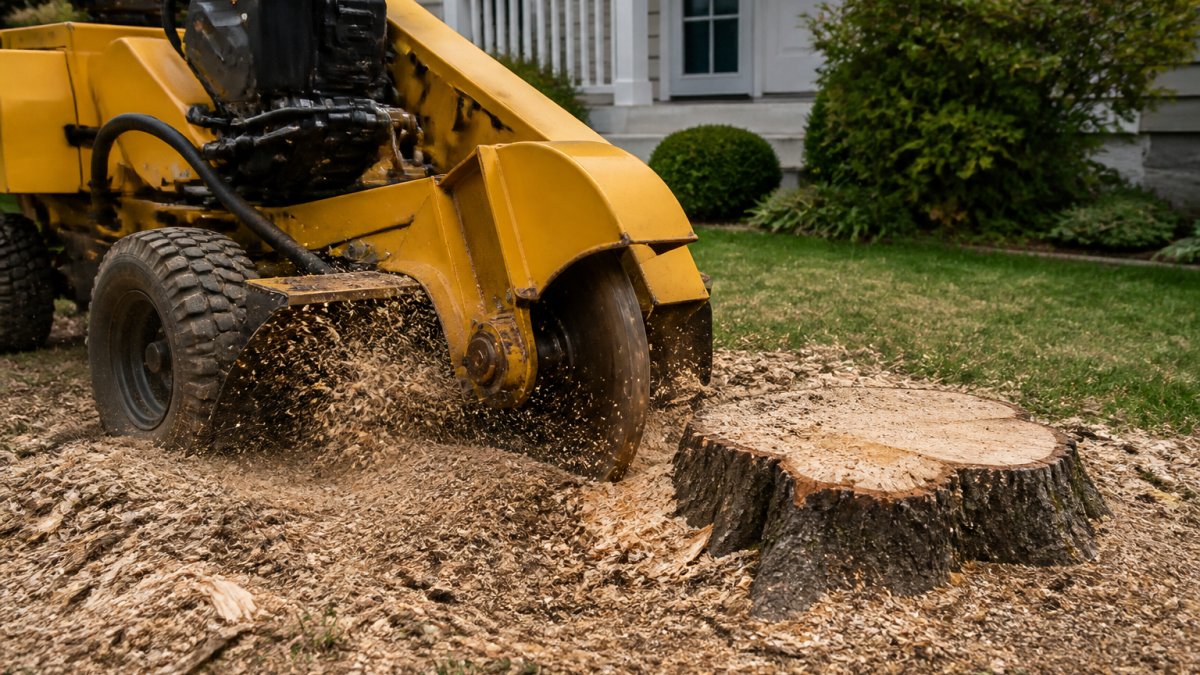
Finding a residential stump grinding service near me starts with three checks: confirm the provider covers your address, verify insurance and equipment access, and compare itemized quotes before booking. A stump grinding service reduces a tree stump to below grade with a rotating cutting wheel, leaving the root system largely in place. Quotes are priced per inch on the stump's widest diameter at ground level, plus modifiers for depth, roots, access, and chip disposal.
- Measure the stump's widest point at grade, then multiply by the provider's per-inch rate for the base price.
- Grinding leaves roots to decay, while full removal excavates the stump and major roots at higher cost.
- Ask every provider what depth they grind to and whether they remove the grindings.
- Call 811 before the scheduled date and arrange a private locate for private lines.
- Decide on wood chip disposal before the visit, since hauling changes the quote.
Table of Contents
- How to Hire a Residential Stump Grinding Service Near Me
- Stump Removal Cost per Inch: What Drives Your Quote
- Grinding Versus Full Stump Removal
- How Long Does Stump Grinding Take?
- Stump Grinding Cleanup and Wood Chip Options
- Questions to Ask a Stump Grinding Company Before You Book
- Preparation, Safety, and Utility Locating
- Frequently Asked Questions
How to Hire a Residential Stump Grinding Service Near Me
Finding a residential stump grinding service near me starts with three checks: confirm the provider covers your address, verify insurance and equipment access, and compare itemized quotes before booking.
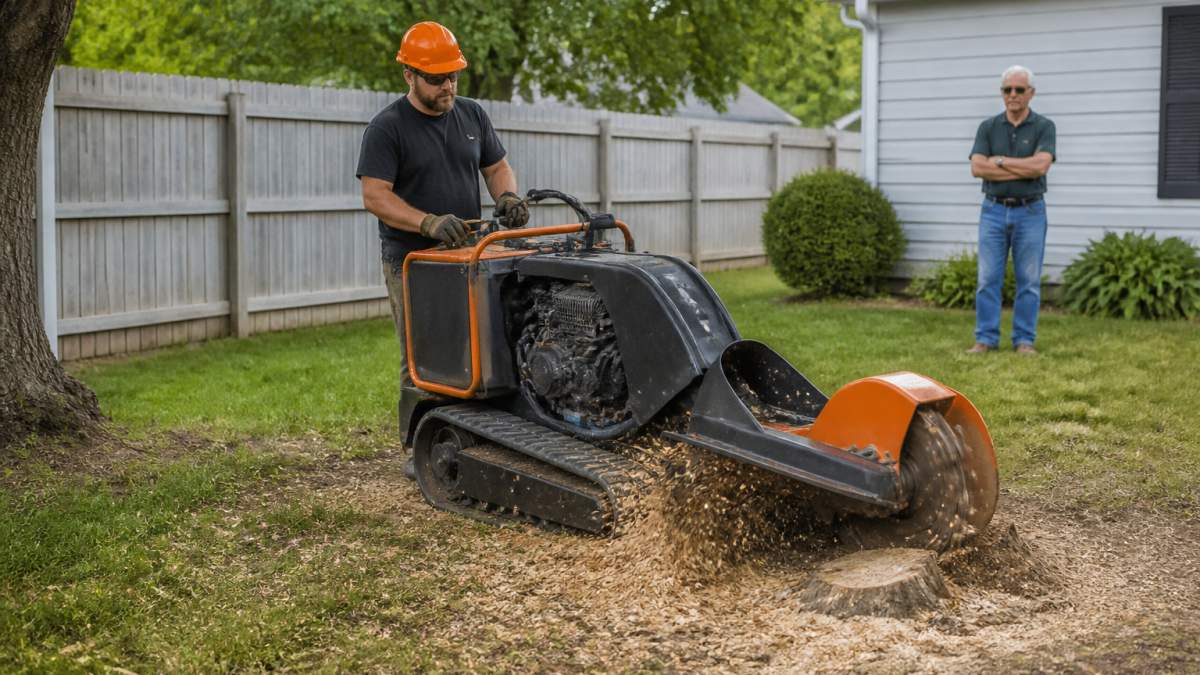
A stump grinding service is a contractor that reduces a tree stump to below grade using a rotating cutting wheel, leaving the root system largely in place. That distinction matters.
Below, we walk through hiring step by step, then cover cost factors, grinding versus full removal, timing, cleanup, and safety questions to ask before anyone backs a machine onto your lawn.
Step 1: Confirm the Provider Serves Your Property
Service area is the first filter, not the last. A provider listing your suburb may still route crews by county, so confirm your specific address is inside the daily service zone. Ask whether the company handles both residential and commercial service, since a crew set up for commercial grounds may not want a single backyard stump.
For property managers and HOA boards, ask for references from similar sites.
Step 2: Verify Insurance and Equipment Access
Insurance is non-negotiable. Ask for a current certificate of insurance showing general liability coverage. If a machine damages a fence, driveway, or buried line, an uninsured operator leaves you holding the bill.
Equipment access matters just as much. A track stump grinder needs a gate wide enough to pass through and a path that avoids soft ground after rain. Tell the provider about slopes, retaining walls, sprinkler heads, and narrow side-yard approaches before the visit, a quick phone description saves a wasted trip.
Step 3: Compare Quotes and Schedule Service
Compare quotes line by line, not by the bottom number. A quote should state stump count, each stump's diameter, grinding depth, whether surface roots are included, and what happens to the wood chips. Ask each contractor for a site visit rather than a quote from a photo.
Stump Removal Cost per Inch: What Drives Your Quote
Stump removal cost per inch is the industry's standard pricing unit, calculated on the widest diameter of the stump at ground level. A stump measured at 30 inches across is priced as a 30-inch stump, even if it tapers below the soil.
Here is how the per-inch math actually works, so you can sanity-check any quote you receive:
- Measure the widest point at grade. Not the height, not the visible top, the widest cross-section where the trunk meets soil.
- Multiply by the provider's per-inch rate. Rates vary by market and machine size, but the structure is consistent: diameter × rate = base price.
- Add the modifiers below. Depth, access, roots, and chip disposal are added on top of the base, which is why two 24-inch stumps can carry very different final prices.
A worked example: a 24-inch maple in an open front yard with standard depth and chips left on site is a straightforward base-rate job.
The Modifiers That Move a Quote Most
- Stump diameter and count. Larger and multiple stumps take longer and wear cutting teeth faster, so a yard full of stumps is priced with wear in mind, not just time.
- Root system spread. Surface roots that cross a lawn or driveway add grinding time. Providers often price visible surface roots separately from the main stump.
- Equipment access. A gate the machine barely fits through slows the job considerably. Measure your narrowest gate opening before you call, a track grinder needs a clear path wider than its track width, and a standard walk gate is often the binding constraint.
- Grinding depth. Going deeper than standard below-grade clearance costs more, because the machine cuts more wood and more soil. Confirm the depth in inches, not just 'below grade.'
- Site conditions. Rocks, slopes, and buried debris all increase risk and time. A slope that forces the operator to work uphill changes the job.
How to Compare Quotes Without a Flat Rate
We quote each property individually rather than publishing a flat rate. Ask each provider to break the price into the same buckets: base per-inch charge, depth, surface roots, access surcharge, and chip disposal. A quote with only a bottom-line number is harder to compare and easier to inflate on site.
Stump Size, Root System, and Equipment Access
An old, thick stump is rarely a problem for a professional-grade track machine, access slows a job, not age. A 15-year-old oak stump in an open backyard is often faster to grind than a modest stump wedged between a foundation and a fence. The per-inch rate is a starting point; the modifiers above decide whether your quote lands near the base rate or well above it.
Grinding Versus Full Stump Removal
Grinding and full removal solve different problems, and the right choice depends on what you plan to do with the spot. Grinding reduces the stump to below grade and leaves the root system to decay naturally. Full removal excavates the stump and major roots, disturbing far more soil and costing considerably more. Neither is 'better' in the abstract, they answer different questions.
What Each Method Actually Does
Grinding uses a rotating cutting wheel to chip the stump down to a set depth below grade, typically several inches under the soil line. The visible stump disappears, the lawn can be leveled, and the root system stays in the ground to decay.
Full removal uses an excavator or stump puller to lift the stump and major roots out of the ground.
| Factor | Stump Grinding | Full Stump Removal |
|---|---|---|
| What happens | Stump ground below grade | Stump and major roots excavated |
| Yard disruption | Minimal, track machine access | Significant soil disturbance and a large hole |
| Relative cost | Lower, base per-inch rate plus modifiers | Higher, excavation, hauling, and backfill |
| Timeline | Usually under a day | Often a full day or more |
| Roots | Left in place to decay | Removed with the stump |
| Best for | Lawns, curb appeal, replanting, mowing hazards | Construction, hardscape, new builds, root-obstructed sites |
| Wood chips / debris | Left on site as mulch or hauled away | Hauled away with the stump and roots |
How to Decide for Your Property
Choose full removal when the stump sits where a foundation, patio, or driveway will go and the roots must be cleared.
A middle path exists for some properties: grind the stump, then grind the visible surface roots that cross walkways or beds, and leave the deeper roots to decay. Ask your provider whether surface-root grinding is included or priced separately, it is one of the modifiers that changes the quote.
Will the Tree Grow Back?
Will the tree grow back? Grinding removes the visible stump but leaves roots alive for a period, and some species send up shoots from surviving roots, so monitor the area and cut regrowth promptly. If the tree was already declining or the stump is old and dead, regrowth is less likely. If you need the root system gone entirely, for a patio, foundation, or new planting, full removal actually clears it.
How Long Does Stump Grinding Take?
How long stump grinding takes depends on diameter, count, and access. A single stump in an open backyard is typically a short visit. Multiple stumps, tight gates, or deep grinding push the job toward a half day or longer.
Ask the provider to estimate the visit window when scheduling, and confirm the crew handles cleanup in the same trip. Same-week scheduling helps.
Stump Grinding Cleanup and Wood Chip Options
Stump grinding cleanup is part of the service, not an add-on. A finished job means a level area, a raked surface, and a clear answer about the grindings.
You generally have three options for the wood chips:
- Leave them on site as mulch around beds or under shrubs.
- Spread them thinly over the grind spot if you plan to replant.
- Have them hauled away if you need the area clear for sod, hardscape, or construction.
Decide before the visit. Hauling changes the quote, and crews plan trailer space accordingly.
Questions to Ask a Stump Grinding Company Before You Book
The questions to ask a stump grinding company before you book come down to coverage, insurance, depth, cleanup, and follow-up. Get answers in writing where possible.
- Do you serve my exact address, and how soon can you schedule?
- Can you provide a current certificate of insurance?
- What grinding depth do you work to, and is it included in the quote?
- Are surface roots included, or priced separately?
- What happens to the wood chips?
Preparation, Safety, and Utility Locating
Preparation is short but protects your property.
Safety around the machine is straightforward: keep children and pets indoors while the grinder runs, and stay behind the operator's marked boundary.
Utility locating is the step homeowners most often forget. Call 811 before the scheduled date and allow the required notice period.
A stump in the yard is a hazard, a mowing obstacle, and a blocker for whatever you want to build next.
Frequently Asked Questions
What should I ask before hiring a stump grinding service?
Ask for proof of insurance, whether the quote covers cleanup and wood chip removal, and how deep the stump will be ground. Confirm the provider services your address and can access the stump with their equipment. Request a written estimate that lists stump size, root flare, and any extra charges. Also ask about scheduling windows and what happens if a utility line or fence is damaged. A reputable residential stump grinding service near me will answer these plainly before you book.
How long does professional stump grinding take?
Most single residential stumps take under an hour to grind once the equipment is in place. A large oak stump with a wide root flare can run longer, and multiple stumps on one property add time between setups. Access matters: a stump in an open yard moves faster than one behind a gate or near a fence. Ask your provider for a time estimate based on stump diameter and site access so you can plan your day.
Does stump grinding include cleanup?
Cleanup terms vary by provider, so confirm before booking. Many services grind the stump and leave the wood chips on site as mulch, which is useful for garden beds. Others haul chips away for an added fee. Ask whether the quote includes raking, filling the hole, and leveling the area. If you plan to replant or build, you may want chips removed and the hole backfilled with topsoil.
Is it worth renting a stump grinder instead of hiring a service?
Renting can make sense for one small, accessible stump if you have the vehicle, strength, and time to run the machine safely. For larger stumps, tight access, multiple stumps, or utility concerns, hiring an insured professional is usually the better call. Grinders are heavy and kick back hard, and rental units often lack the power of commercial track grinders. Weigh rental fees, transport, safety risk, and cleanup against a written quote.
